Where did my summer go?

Last time I looked, it was July 4th. Summer was in full swing. The Hollywood Bowl, lazy nights in the backyard barbecuing and sipping wine, a trip to Tucson to bake in the sun, poolside and move our college girl into her new place, her return home for a couple of wonderful weeks, visits from family.

But now the house has cleared out. It’s still ridiculously hot outside, but the atmosphere has changed. Daughter #1 is back to college. Daughter #2 is trying to finish up an essay due on Wednesday, her first day of high school, and pack as much into the remaining days of summer as she can. While work never really slowed down this summer for me or my hubby, we’re suddenly setting the alarm a little earlier, checking things off the to-do list, planning ahead for the Fall.  Yesterday, driving down the freeway, I saw a Halloween store – yes, that’s right. If you weren’t already bemoaning the start of school, just a little reminder that the end of October is nearly here!

While I have yet to hit the beach this summer (maybe this weekend?!), I realize I did manage to pack in all of the important things this summer. Being with family. Extended dinner conversations. More contemplation and relaxation. Reading. Soaking in the sights and sounds that mean summer in Los Angeles. And, of course, watching those amazing human specimens compete in London. I got to do a few things that qualify as truly spectacular including watching my older daughter swim at the Olympic Trials in Omaha (and watching my younger daughter take photos with every swim star she could find!).

There are always more things I could have, should have done during our summer. But it’s also good to turn the page knowing I’ve enjoyed the moments we had. So I’m looking forward, embracing the coming fall, gearing up for the return of cooler days, shorter nights, books strewn across the kitchen table, and yes, even, Halloween (though please don’t mention Thanksgiving yet. Please.). And I do look forward to getting back to the writing, resuming this blog that I’ve left dormant for far too long.

That said, it’s Saturday and it’s still summer. I’m off to soak up some sunshine. How about you?

Why I’m Ok With Not Being “The Hot Mom”

At my younger daughter’s graduation dinner the other night, my mother and I were talking about perceptions that my friends had of her, as a young mother. My daughter, knowing some of the history, said, “Grandma, you were the cool Mom! And the hot Mom!” Yes, it’s true that my mom was way “cooler” than I will ever be and my house was frequently the place you came to let your hair down, talk about your troubles and of course, party. Times were different and my Mom was only 18 years my senior. As my male friends can attest, my mom was, indeed, “the hot mom” on the block.

Then, an interesting thing happened. My mother asked her granddaughter: “What would you and your friends call your mom?”  Without hesitation, my daughter threw out three words in quick succession: “Successful. Smart. Hardworking.”

Now, I must admit, I’m female and I’m vain, so part of me was hoping she’d include the word “hot” in there somewhere! But all in all, I’d have to say that I felt immense pride and pleasure in her words.  There are so many moments spent raising children, most of them wondering if you’re doing the right thing. You know you are often making mistakes and you just hope they aren’t the sort that will take permanent root in your child’s psyche. The moments when you know you’ve done something right are few and far between, and often don’t come until after your children have become adults and flown the coop. That’s why hearing these words from my younger daughter – with whom I seem to battle so much these days – was so rewarding.

I’ve always been a working mom and don’t expect that to change. I know that I’m fortunate, having been able to start my own business when my oldest was just a baby and to be able to work from home for the past 19 years. I know for many working moms it’s not that easy and they have to add a commute and a typical 9-5 corporate day to their endless juggling. Like every working mother, at times I’ve felt guilt at my desk, thinking about my children, and guilt with my kids, thinking about work. I’ve multi-tasked to exhaustion, questioned my sanity, and wondered if what I was doing was right for both me and my kids.

At the end of the day, work became important not only for my sense of self and to be an equal partner with my husband in providing for our kids, but also critical to the values I wanted to impart to my girls. I wanted to show them that women can be whatever they choose: that they can have both a family and a career, that they can be successful in the corporate environment or forging their own path, and that they can find a partner in life who respects and takes pride in their success.  To find fulfillment in my job and to share that with my girls has been an essential part of my parenting.

So the other night it seemed that in just a few select words, my younger daughter told me all I needed to know about my choices. That she sees me as successful, smart and hard-working, gives me insight into her perception of moms and women, as a whole. And it gives me hope that she understands that hard work, a good education and a whole lot of enthusiasm and drive will also bring her success, in whatever way she chooses to pursue it.

So while she could have really made my day by adding “hot” to the already stellar list of adjectives, I’ll take what she has given me and know that on this long journey we call parenthood, I’ve done something right!

Getting Used to the Big Numbers…or 50 Things I’m Grateful For

At the end of this year, I will have to face a large number, a number that means I have reached five decades of existence. Why is this so difficult? After all, they say 50 is the new 30, a milestone, to be sure, but certainly not considered old age anymore. And as my husband is fond of saying, “it beats the alternative”. Maybe I fear it because I never imagined getting to this number. Like all kids, I couldn’t wait to be 16 so I could drive a car, 18 so I could go to college, become an adult and vote, and 21 so I could drink (ummm…legally). While I wasn’t anxious to reach the age of 30, I imagined where I would be and what I would be doing at that age (the year my first child was born, as it turned out –didn’t figure that!) and I could even see beyond that horizon to where I might be at 40. But 50? That’s just not a number I ever imagined.

So I’ve decided in an attempt to get used to that frightening number that I ought to start making lists of 50 that are not so scary. Like 50 things I’m grateful for, 50 things I’ve accomplished, 50 things I have yet to do, that I’m looking forward to doing some day.  50 places I’ve traveled and 50 I have yet to visit, 50 great novels (definitely won’t be including 50 Shades of Grey), 50 songs I can’t live without (maybe “50 Ways to Leave Your Lover” should be on there), and maybe 50 posts I want to write. By making these lists maybe I’ll become accustomed to that scary-looking number by the time I get there….or maybe I’ll just have to drink a lot to hide the pain.

My inaugural list is 50 things I’m grateful for. Here goes:

1)   My health and that of my loved ones.

2)   My husband and the fact that his personality is the opposite of mine.

3)   My daughters.

4)   My Mom and Dad.

5)   My friends who are still my friends.

6)   My friends who are no longer my friends, but who helped shape me.

7)   The people who loaned me money in college.

8)   Every teacher who told me I could do “it”, whatever “it” was.

9)   My first love.

10) Being able to attend, and graduate from, UCLA.

11) Working from home for almost 19 years now.

12)  When I was still commuting to work every day, getting to drive down PCH every morning.

13)  All the clients who have hired me, those who have referred me and most especially, those who have hired me repeatedly to do work for them.

14) A good night’s sleep, when I get it.

15) The fact that my husband likes to cook.

16) The fact that one of my daughters has already taken after him in the cooking department.

17) The unconditional love of dogs.

18) Getting to spend part of my childhood in La Jolla.

19)  Music, music, music.

20) Books, books, books.

21) Daffodils in the spring.

22) Good wine.

23) Good, strong coffee.

24) Mint chip ice cream.

25) The scent of fresh lemon.

26) Pilates, without which I would be an injured, aching mess.

27)  Nordstrom’s customer service – can you beat it?

28) Getting to sit in the front row of the David Cassidy concert when I was 9 years old.

29) Getting to sit third row and front-row, center, respectively, at two Dave Matthews concerts as an adult and experience it with each of my daughters.

30) Jon Stewart and The Daily Show.

31) The beach.

32) Sunsets, especially at the beach.

33) Bangs…without them I might have to resort to Botox.

34) Online shopping.

35) Being able to live in California.

36) Not having to live in Texas.

37) Watching sports on a big screen TV.

38) Sunday’s Los Angeles Times…in print

39) The trip to England, Scotland and France I took with my best friend for high school graduation.

40) The opportunity to spend time in my husband’s native Sweden.

41) Dishwashers.

42) The advice of friends and colleagues who experienced things before me and shared their wisdom.

43) Clothes that don’t wrinkle.

44) The iPhone.

45) Summer.

46)  The Hollywood Bowl.

47) Writers.

48) Getting to watch my older daughter swim at Olympic Trials.

49) Friday evenings.

50) Getting to watch both my girls mature, follow their passions, learn from their failures and enjoy their successes.

When it comes to reading, does anything go?

I have always been an avid reader and am a huge believer in the power of the written word.  One of my earliest memories, when I was maybe four years old, is of sitting on my family’s couch, literally surrounded by massive piles of books, all of which I was sure I was going to read that very day.  I know that I owe part of my passion for reading to my mom who modeled good reading habits for me and always seemed to have an Agatha Christie or other such mystery in her hands.

As a parent, I have always tried to instill this love for reading in my two daughters with, admittedly, mixed results. While I read to them both from babyhood until beyond the time they could read for themselves, and while I continued to model good reading habits with my own reading, my older daughter really never adopted a passion for pleasure-reading, but merely read what she had to for school. My younger daughter, on the other hand, does enjoy reading and has always reserved time in her schedule to do so, but as the burden of school-reading increases, I can see that this passion could cool over time, if we’re not careful to continue modeling and encouraging.

Given this passion for reading, I’ve always believed that “any reading is good reading”.  While I want my kids to read challenging works, classic stories and thoughtful literature, I’ve never discouraged them from picking up less intellectually demanding material like The Clique series or Pretty Little Liars books. These books serve a purpose, as well – they provide great escapism, simply story lines and again, they count as reading time (and time spent away from the computer and phone).

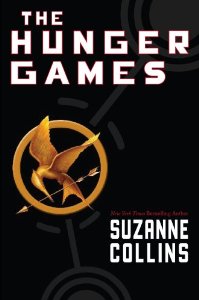
But I recently read some disturbing news that made me question whether any reading is good reading. A recent article in the Huffington Post about the results of a Renaissance Learning report, revealed that American high school students are primarily reading books that are designed for a fifth-grade reading level.  The most popular book among high schoolers last year was The Hunger Games – a book that is ranked at a 5.3 level, meaning it is just above a fifth grade level.

While The Hunger Games is a great story that both teens and adults have embraced (see my previous blog post on this topic; in short, I loved it), the repercussions of the study’s results are clear: if kids aren’t reading material that is challenging enough for high school – much less college – how are they to improve their reading and writing skills enough to think critically and to synthesize and analyze higher-level curriculum?   Unfortunately, the article points out, this study reflects trends in national reading scores which remain low and have dropped significantly between 1992 and 2009.

So do we let our kids read whatever they want – comic books, tween “chick lit”, Seventeen magazine?  Or do we push them to read books that are indicated for their grade level and challenge them?

I admit, I’m of two minds about this. On the one hand, since students are and should be expected to read works of literature in the classroom that are “at grade level”, I’m inclined to let mine choose what they read for pleasure. On the other hand, I’m cognizant of the fact that a steady diet of Pretty Little Liars is certainly not going to expand their horizons (much less their vocabulary) substantially. In a perfect world, they would choose to read much more challenging works during their free time, but even I am tempted to pick up the occasional People Magazine at the hairdresser’s or the latest pop culture phenomenon, Fifty Shades of Grey because it gives me a respite from some of the deeper and more thoughtful works I usually read (side note: don’t bother with “Grey” or at least, don’t spend any money on it. My take: it’s poorly written, the plot is old and tired, and the dominant/submissive thing was done so much better by Anne Rice in The Claiming of Sleeping Beauty and Exit to Eden years ago. Sorry, but poor writing, no matter how sexually explicit, turns me off).

So, should we try to encourage our kids to reach more intelligent and stimulating works? Should schools do more to encourage the reading of classics and weightier modern-day works?  Or should we just focus on encouraging the act of reading – regardless of the material? What do you think?

Saying Goodbye to Who We Used to Be

This weekend, my former writing instructor, Tod Goldberg, wrote a tribute to Adam Yauch of The Beastie Boys, who passed away last Friday. Tod wrote eloquently about what The Beasties’ music meant to him. One line of his tribute really stuck with me:

…you begin to recognize that the sadness you feel isn’t just about the loss of that person’s life, but also the recognition that who you were when you met that person is long gone, too.

This simple truth helped me understand why we can be so overwhelmed with sadness at the passing of someone we’ve never even met. After all, while we might feel like we knew Adam Yauch or Clarence Clemons or Whitney Houston or any of the countless others who we’ve lost recently through their public personas, most of us have never met, much less been a part of these people’s lives. What is it then, that causes the heart-wrenching void we feel when a favorite musician, actor, novelist or other public person dies?

As Tod so perfectly articulates, it’s the knowledge that who we once were, at a certain place, in a certain time, is gone forever. The young child, sitting in a mother’s lap, listening to a beloved story, the awkward pre-teen dressed to impress at a first dance, the college student, cramming for finals in a dorm room, the young parents trying to quiet a restless newborn in the wee hours of the morning. We recognize in the passing of the people who formed the backdrop to our lives that we can never again be who we were then – that a certain part of us has disappeared forever. It’s bittersweet, the acknowledgement that we’ve matured and grown, left behind pieces of ourselves in the process that only seem more dear to us with the passage of time.  Through the faded lens of nostalgia, even the bad morphs into good and we long for the feeling of being in that place and time again.

The loss of who we were seems to hit especially hard at this time of year, with Spring turning into Summer, the time of graduations and moving on. At this time last year, I was planning my older daughter’s high school graduation. Amid the excitement of parties and celebrations and orientation for her new life on a university campus, came the sad acknowledgement that things in our house would never again be the same, that a special period in our lives was about to depart from us forever and that we would all be changed. Walking her new campus during orientation, I was struck with nostalgia for my own college days, so much so that even the tough times began to seem perfect and magical.  It wasn’t simply my youth that I missed. It was the person I was in those days – the person I was before launching headlong into adulthood and the working world and before becoming a wife and mother. It was a time when I wasn’t even aware of all the milestones I was checking off – milestones I now realize are all in my rear-view mirror.

Ahead of me lies one daughter’s middle school graduation, the other daughter’s completion of her freshman year in college, our first summer without two children at home, and at the end of the year, a significant birthday that marks the passage of way more time than I’d like to admit.  I don’t mean to seem so morose – I embrace the future and look forward to all that is new. But I can’t help missing those people, places and times now departed. Because after all, their loss means saying goodbye to who I was when I encountered them – a part of me that I have to let go.

Why Do We Procrastinate With the Things We Love?

Sunday morning admission: I am currently suffering from a bad case of procrastination. If my children read this, they will laugh and feel vindicated. I am not the family member who typically suffers from this condition. I’m the one who gets things done, who takes control and finishes what I start.  I do this at work, with the household chores, with activities that need to be scheduled and arrangements that must be made. Why then, do I find it so difficult to do that which I profess to love so much?  Why am I procrastinating with my writing?

Writing is the thing I’ve most wanted to do since I can remember. All of us have ideas about what we will be when we grow up, but then life happens and oftentimes, we don’t end up where we thought we’d be. I have no regrets about my educational and career paths, but about ten years ago I felt something was missing. Turns out it was the writing. As a kid, I spent countless hours penning stories and poems in my room. I kept detailed diaries and rarely missed a day’s entry. I wrote letters to friends and relatives and even to my girlhood celebrity crushes (David Cassidy, I apologize for the stalker-like notes I’m sure I sent to you). My best friend and I created “magazines” for our own amusement and when we temporarily lived in different cities, receiving her magazine in the mail and creating one to send back to her was often the highlight of my week (by the way, this friend, Ms. Caitlin Rother, is now a very successful writer…go figure!).

I went back to my creative writing roots several years ago by taking some courses through the UCLA Writer’s Program. I started with short stories – the first of which was dreadful, as I’m sure my former instructor would attest. Writing is a muscle that needs to be exercised and when it’s not, well, the results are less than stellar.  But with time and practice, I reconnected with my writing passion and finally had one of my stories published. Soon after, I realized that I really wanted to write a novel. I had an idea – I just needed the time and energy to execute it. At the time, I had several demanding clients in my technology PR practice, my kids were young and equally demanding, and life moved at a frantic pace. And yet, somehow, I was determined to write, and at the end of three years, produced a first draft.  I began pitching and querying agents, embarking on what I’d hoped would eventually be a new career. Of course, as any experienced writer will tell you, it’s just not that easy and, now, I realize that maybe the novel just wasn’t that ready. After many promising responses and requests to see more pages or the full manuscript, I ended up with a drawer full of rejection notes and a bad case of the writer’s blues. Things got busy on the work and home front and I put my novel aside.

But the writing bug didn’t disappear. Seven years later, I’m back in a writing class, trying to rewrite the novel.  It’s a painstaking process that often involves revising the same five pages fifteen times.  I know that the odds are against me and that perseverance is the main ingredient for success, and after all this time I have to ask myself if I truly want this as much as I’d thought when I was a ten-year old, scribbling stories in my room.  The answer may be no and if it is, I have to be willing to just enjoy the process for what it is. The good news is that there are now a myriad of other publishing options (self-publishing, ebooks and the like) and new, creative outlets for writing that never existed before, like this blog.

Which brings me to the topic of this post: procrastination. It’s easy to understand why humans procrastinate when it comes to mundane or dreaded tasks like laundry, grocery shopping or reorganizing a closet. But why do we procrastinate when it’s a task we presumably enjoy, an activity that is supposedly so close to our heart’s desire?  In the past two weeks, though I’ve spent an inordinate amount of time thinking about my novel, I’ve yet to put more than a sentence on the page.  Even for this blog, I realized that my goal of a weekly post is two days overdue and getting myself to sit down and type this required two cups of coffee, a completely silent kitchen and more than a little self-bribery (i.e. trying to tell myself that I could look at my Twitter and Facebook feeds and the Sunday paper only after knocking off a full page of something – anything!).

At the end of the day, do we procrastinate on the activities we love out of fear? Fear of failure? Fear of success? For myself, I can only think that it’s a little of both. If I write and fail, I will wonder what the point was, why I spent so much time in pursuit of a dream that may not come to pass. If I succeed, I will wonder how I can possibly meet the expectations and requirements of the editing/publishing process, how I can ensure that my novel is not a one-hit wonder, and how I might balance my current, financially rewarding career with writing. Procrastination is my defense mechanism, the thing that makes me pause and question myself, the process of reminding myself that nothing is quite as perfect as we imagine it might be. Succeed or fail, there will still be good days and bad, things about writing I love and things about it that I hate.

For now, I’m just going to sit back and enjoy that for a few moments this morning, I managed to conquer the procrastination monster and pen a few paragraphs for this blog.  I’ll reward myself by reading the Sunday paper and wasting some time on social media…until I realize that my writing class deadline for the next installment of my revised novel is due on Tuesday…and I go to battle with the procrastination monster all over again.

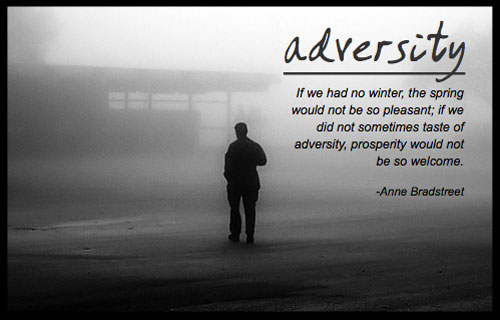
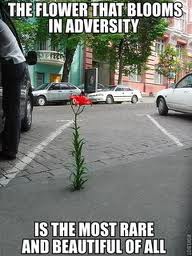
Is Adversity a Requirement for Success?

My younger daughter recently had shoulder surgery – not something you plan to deal with when you’re an active 13-year-old whose sport happens to be swimming and who enjoys a full social life. Just after her surgery, I overheard a conversation she was having with her older sister who is away at college. My little one was clearly trying to stir up some sympathy from her sibling and was bemoaning the fact that she has to wear a sling for eight weeks and will then have the daunting task of trying to regain her strength to get back in the pool and swim over the course of the next six months. My older daughter dispensed these words of wisdom to combat her sister’s complaints: “Adversity is a good thing.”

This gem was spoken by the same girl who complained incessantly when her iPhone went in for repair and she had to use that “awful, ancient” Motorola Razr for three whole days: “But Mom, it’s impossible to text on this thing!  And it has no Internet!” Imagine the adversity of having to use a 6-year old cell phone for three whole days!

But in all seriousness, I thought about these words of wisdom and how Daughter #1 came to the recognition that adversity can be a positive and not a negative. As it turns out, my oldest does have some valuable lessons in adversity that she can share with her sister when it comes to their chosen sport of competitive swimming. Daughter #1 has been swimming on a team since she was five years old, on a competitive, year-round club since the age of nine and is now on partial scholarship, swimming for a Division 1 college team. During her years in the pool, she had an almost comical (though, in reality, not funny – or fun – at all) number of coaching changes – particularly during her formative periods. She also witnessed all of her best friends leave the team or quit swimming entirely, and struggled through a two-year plateau where she did not see a millisecond of improvement in any of her best events. She experienced most of this during her high school years, continuing to attend nine practice per week, including three mornings where she had to rise at 4:15am, drive 15 miles to the pool and practice from 5-7 am, attend school all day, return to the pool for practice from 4-7 pm and then conquer the usual homework and chores most students have to deal with.  She struggled to balance swimming, school, family and social life. She was fortunate to have a few good friends, her family and a couple of special coaches who encouraged her to stick with it and if you ask her now, she’ll tell you she is happy she did and could not imagine her life without swimming. After breaking through that time of struggle, she was recruited to one of the top college swim programs in the nation and in June, will compete at the 2012 Olympic Team Trials in Omaha, Nebraska.

While I admire her, I do tease her when she talks about conquering adversity. After all, she is not living in a war-torn country with the threat of dropping bombs all around her or living in an impoverished, third world nation where she goes hungry every night, nor does she suffer from a debilitating disease. When we speak of adversity, then, we are speaking of a very personal kind of adversity that does not even begin to compare to what some in the world unfairly struggle with every day. Nevertheless, though it is all relative, she has experienced struggles and difficulties and has come out the other end stronger and a better person.

More importantly, this issue of adversity got me thinking about what we give our children, what we do for them and whether or not it helps them, at the end of the day. As a child who was raised by a single, working parent struggling to make ends meet, I worked hard and saved to make sure that my family never had to face the same. As a child of divorce, I promised myself that when I got married, it would last, and knock on wood, here I am, married to the same guy for 26 years now and going strong.  As a child who attended four different schools in sixth grade alone and was uprooted numerous times to different states, cities and neighborhoods, I made a pact with my husband that we would raise our children in the same place so they wouldn’t have to experience that upheaval. So far, so good – we’ve been in the same house for nearly 14 years and our daughters have grown up and gone to school with essentially, the same group of kids.

’m happy that my husband and I were able to provide these things for our children and I certainly don’t regret following this path. But I do have to wonder: is it really a good thing that I’ve protected my children from so much adversity?  I look back at my own childhood and while there were many difficult times that I would never want to repeat, there were also important lessons learned. Having a mother who struggled financially motivated me to begin working at the ripe, old age of twelve and never stop. I was determined to work hard, have my own money and not be dependent upon anyone. It also motivated me to achieve in school so I could attend a good college and have a higher-paying career.  Being the child of divorced parents taught me about relationships – what I wanted from them and more importantly, what I didn’t want.  Having to move and uproot was painful, but it taught me how to adapt to new situations quickly, how to make new friends and how to adjust to new surroundings. I learned valuable coping skills that contributed to success in school and have been advantageous in the business world.

As I look back on the lessons I learned from my childhood experiences, I wonder if my husband and I have somehow done our daughters a disservice by giving them a stable, financially comfortable upbringing in which they can avoid much of the adversity I dealt with.  Where will they learn the importance of hard work? How will they know the value of financial independence? Will they be able to adjust to new situations and new people? Can they handle the only constant in life – change – when it is thrust into their paths?

While I don’t know for sure, I am at least comforted that somewhere down the line, my older daughter began to view adversity as a good thing and is now trying to impart this wisdom to her sister. She may have overcome a different kind of adversity than I had to, but it’s clear that she has still learned the crucial values of hard work, persistence and perseverance. There is relief in the knowledge that she is almost at the end of her freshman year and thus far, has successfully navigated life away from home – adjusting to new surroundings, making new friends, succeeding in both the classroom and with her sport.  I can only hope that the same will hold true for Daughter #2 when it’s her turn – that maybe her sister is right that the small adversity her shoulder surgery thrust upon her will result in some valuable lessons about determination, hard work and resilience.

Do you think adversity a requirement for success? How do we give our kids a comfortable life without sacrificing the lessons that can only be learned by struggling a bit?

How Do We Define Fairness in an Unfair World?

How many times have you heard your child utter the words “no fair”?  We’ve all likely uttered the phrase a few times in our own adult lives, but there’s nothing like your child looking up at you with wide, innocent eyes and calling something unfair to make you wonder just how you can explain the concept for his or her young mind. Do you simply say, “Well, life’s not fair” or do you try to differentiate between truly unjust situations and the sometimes, natural human feeling that we need to assign blame to someone or something when things don’t go exactly our way?

The concept of fairness is interesting because it seems to mean slightly different things to different people.  From a strictly semantics point of view, the dictionary defines the word fair as “free from bias, dishonesty or injustice”. Given that definition, it seems that fairness is like that old courtroom argument about obscenity: “I’ll know it when I see it.” In terms of teaching kids about fairness, I think most parents want their children to behave in a just and unbiased way, while expecting the same treatment from others. On the other hand, it makes sense to prepare them for the injustices they will surely encounter in their lives.

Fairness is a concept that is also being hotly debated in our country right now in regard to the income gap, taxes and the Occupy Wall Street movement. On one side of the debate, protesters decry the fact that 1% of the country is controlling the majority of wealth and therefore, has the most influence in elections, that by defining corporations as “people”, the Supreme Court allowed unprecedented amounts of anonymous dollars to be funneled into the political process and that Wall Street is responsible for much of the country’s economic woes. On the other side, the argument is that much of this is normal in a capitalistic, free market society, that one must only work hard to reap financial benefits and that the protesters are just jealous of those who have been successful. Ok, I admit that I may have simplified the arguments a bit, but in general, I think it points to the need to differentiate between true injustice and a feeling that if things don’t go your way, there must be someone or something to blame.

So how do we tell the difference? Following the “I’ll know when I see it” concept, I came up with a few examples that I think illustrate the difference between unfairness and “whining”. Only one of these is political; the rest will likely be relatable to any suburban parent.

1)    The fact that Mitt Romney made lots and lots of money over the years is fair (although, the ways in which Bain Capital helped him make that money, may not have been). The fact that he only paid 13.9% in taxes last year, while Americans who make far, far less than he does paid much more is patently unfair.  In fact, I’ll go so far as to say that our current system, which allows these tax loopholes to exist is both unfair and obscene (I know both unfairness AND obscenity when I see them!). If it’s true that in America, anyone who works hard can achieve, then why do hard-working people, putting in 5 days per week, 8 hours per day or more at jobs that pay less than $50K per year pay more tax than a multi-millionaire and struggle to make ends meet?  Not fair.

2)    If a teacher assigns a school project and clearly states that it must be neat, well-formatted and creative, in addition to having satisfactory content, then assigns a lower-than desired grade because the project is messy, hard to read or clearly demonstrates a lack of effort, that’s fair. If the teacher (assuming that this is any class other than art) assigns a lower-than desired grade because the project was not professionally (i.e. required $$ to be spent) printed and bound, artistically brilliant and showed obvious evidence of parental involvement, that’s not fair. We all know the parents who work more on the look and feel of their children’s school projects than the kids do, and a higher grade should never be assigned because some parent forked up the money to go to Kinkos or spent 40 hours helping their kid cut, paint and decorate.

3)    It’s perfectly fair that celebrities who have aged well go on TV to talk about their exercise and eating regimens and how these things have helped them stay young. It’s totally unfair for celebrities who have been constantly airbrushed and cosmetically enhanced to go on TV and talk about how well they have aged, without acknowledging the helpful and expensive tools that made it possible.

4)    It’s perfectly fair for a youth soccer team to beat another youth soccer team by a score of 10-0.  Hopefully, the winning team, after reaching, let’s say five goals, has the sportsmanship to move their players around, let defenders play offense, etc… in an attempt not to “cream” or humiliate the other team.  What’s not fair is when overly competitive coach-parents rig the system so they can stack a team, thereby creating a situation in which every game played has a similar outcome. I know that AYSO and all of those other youth sports organizations have systems in place so this doesn’t happen, but somehow, it always does.

Those are just a few examples but of course, there are a million more. And let’s be real: most of these, save the first example, are not devastating. The truly senseless injustice that abounds in the world  is even more difficult to explain to our kids – why some children suffer from absolute poverty while others have so much, why some are born into war-torn countries where they will never know a feeling of safety, while others live in peace.  These are the hardest to talk to your kids about because there is just no explanation for why some children in the world are orphaned, why some are destined to be child soldiers for an African warlord, why natural disasters or school shootings or so many other terrible things happen to innocent people.

What unfair situations make you tear your hair out?  And how do you explain them to your kids? I’d love to hear your thoughts.

No Virginia, There is no Fountain of Youth

My oldest daughter recently turned 19 and is about to conclude her freshman year of college. I have many feelings associated with this milestone – excitement for her experiences, pride in what she has accomplished, sadness at how quickly the years have passed. And of course, there’s that recognition that if she’s now an adult, I’m beyond adulthood. Yes, I’m, by the standards I set myself as a 19-year old, OLD.  They say that 50 is the new 30. I’ll let you know how I really feel about that later this year, but in the meantime, let me just say that nothing makes you feel older in some ways than having a college freshman. You think it was just yesterday that you were living in the dorms, going to frat parties and rushing from class to class on a campus where it seemed the possibilities for your life were endless. But then you realize, ummm…that was actually a really long time ago.

Complicating the normal feelings that come with the aging process is our society’s continual worship of all things youthful and the ongoing pursuit of a magic elixir that will deliver us from old age.  While the concept of a fountain of youth is not new, it’s only in modern society – and primarily in the United States – where one finds such an obsession with staying young. This pursuit of continual youth is what sociologists would call a “First-World Problem”, given it can only occur among wealthy communities, where the worries of putting food on the table and keeping a roof over your head have been removed.

I think about this often in my little suburban world where it seems that Botox injections and breast implants are as commonplace as the common cold and where moms frequently wear the same outfits as their teenage daughters. What does it say about our society when people – mostly women, but increasingly (in Hollywood anyway), men – will spend thousands of dollars and put themselves through multiple, elective surgeries to chase eternal youth?

A few years ago, on a summer trip to Sweden to visit my husband’s family, we went to a local, community pool so my now-nineteen year old could get in a swim workout.  In the locker rooms, my two girls’ eyes were wide as saucers. They could not understand how every Swedish woman in the locker room – regardless of height, weight and most of all age – could walk around stark naked so comfortably and without the slightest trace of self-consciousness.  Having been raised in the modest (some might say repressed) US of A, I could not fully explain it either, except to tell my girls that 1) Swedes are much less hung up on nudity than we are (as one example, Swedish television is much more concerned with keeping violence off the screen than nudity and sex), and 2) Swedes, and the rest of the world, from my experience, are much more accepting of differences in body shapes and sizes as well as the aging process, and are much less focused on youth and beauty than we are in this country. Interestingly and despite all of this, Sweden seems to have a very high proportion of beautiful people, who age remarkably well.

The point is, my girls were used to seeing people all around them who fear the aging process and who will do anything to try to keep it at bay.  They are used to having the airbrushed images of fashion magazines and the nipped and tucked celebrities of television, movies and theater all around them.  And even in their own neighborhoods, they are used to seeing moms who fight the process daily with creams, treatments and injections, gym trips and diets, clothing from the junior department and yes, surgical procedures. Given these role models, it made me wonder, what messages were my girls hearing about what should be the very natural, and let’s face it –inevitable — process of aging?

I want to be clear that I am certainly not immune to vanity.  It’s hard to look in the mirror and see skin that suddenly sags where once it was firm and lines appearing on a forehead that was once smooth, not to mention those joints that creak and pop when I get out of bed in the morning. There’s definitely a reason I still wear bangs and buy more expensive bras. And I’m certainly not saying you shouldn’t take care of yourself through healthy eating and exercise nor do I think it’s wrong to want to look attractive by wearing nice clothing, taking care of your skin, getting your hair done and using a little make-up.  But it seems to me, you have to draw the line somewhere because no one – no matter what they do – is immune to growing old. And by showing that we view the aging process as “bad” we’re sending a clear message to our kids to fight it– no matter how costly, how time-consuming, how risky or how ridiculous they may look. I say this also on the eve of my younger daughter going in for surgery and as I worry over the risks of anesthesia and the inevitable pain, I can’t help but wonder why anyone would put themselves through this by choice.

I was saddened to read the other day that one of my favorite actresses, Susan Sarandon, admitted to having plastic surgery.  . I realize in Hollywood, it must be hard to compete for great, female roles and the pressure to look young is intense. But I’d hoped that she’d hold out and continue sending the message that aging is ok, that her acting talents are more important than her image and that young girls should have strong, capable women who don’t run from life’s inevitable course as their role models.  I realize Susan is no Joan Rivers – yet.  But I think of plastic surgery as akin to remodeling a house. When you redo one room, the others look tired and run-down by comparison. So you do one more. But you can’t stop there, because the rest of the house doesn’t look as good as those brand-spanking new parts, right?  Next thing you know, you’ve re-done everything. Where does it stop? When you’re spending loads of time and money, and undergoing surgery that can put you at risk, just to prevent yourself from looking older or aging, you have to ask why and what message you’re sending. And if you’re a Mom, you have to wonder what you’re communicating to your kids about your priorities in life and how they should view themselves as they age.

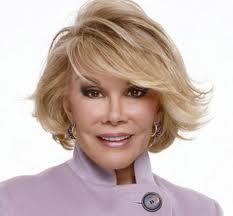
The irony in all of this is that neither Susan Sarandon nor Joan Rivers has succeeded in hiding their age or stopping the aging process – and neither can you or I. The other day I was in the grocery store and saw what I thought was an attractive twenty-something ahead of me, pushing a grocery cart. She had long, flowing blond hair, a tall, lithe body and she was wearing leopard-print leggings, a close fitted tee, a short denim jacket and sky-high heels.  She stopped to grab a box of cereal off the shelf and I almost dropped my own groceries. This was no twenty-something; the woman had to be in her sixties which, despite the collagen lips, very obviously, face-lifted skin and fake breasts, to boot, was quite obvious. I suddenly realized the hair was fake (extensions), the body was courtesy of lipo plus lots of gym time and she’d clearly raided a middle schooler’s closet for her wardrobe. She looked ridiculous. An aging woman chasing dreams of being 19 again.

At the end of the day, you can get new breasts, lift your eyes, pump collagen into your lips and smooth out your wrinkles with Botox. You can wear your teenage daughter’s trendy clothes. But no one will think you’re 19, you still won’t be 19, and you never will be again.  I think that the sooner we can all face that fact and quit fighting it, the less “old” we’ll feel next to those actual 19 year-olds. And perhaps we’ll finally deserve the adage that with age, comes wisdom.

Let the Games Begin…The Hunger Games, That Is

I know, I can hear you sighing and see the rolling of your eyes already. If you’re the parent of a child who falls into the Young Adult novel demographic, you’re already tired of hearing about the latest blockbuster trilogy premiering this week in a theater near you. Hell, you’re probably recovering right now, giant cup of coffee in hand, promising yourself you’ll never give in to your child’s pleading to attend a midnight premier ever again.

If you don’t have a child of a certain age in your household, you’re wondering what the hype is all about and why you should care.

So, I’m here to tell you why: because The Hunger Games is a great story. Fans of War and Peace and The Corrections (I can see Franzen cringing at the notion of Suzanne Collins’ books sitting next to his on Oprah’s bookshelf) alike: I’m talking to you, too.  This is a damn good story.

Let me add that I also enjoyed all four Twilight books. You do not need to be a “young adult” to enjoy good YA fiction. And if you’re a parent whose children enjoyed these books, you have even more compelling reasons to pick them up yourself.

Here’s why you – and by you, I include PhDs in English literature, along with fans of People Magazine – should read The Hunger Games:

1)    Everyone loves a good story. As Lisa Cron, author of the forthcoming Wired for Story: The Writer’s Guide to Using Brain Science to Hook Readers From the Very First Sentence explains so articulately in her recent NY Times op ed, it’s not the “exquisite sentences and breathtaking images” that grab us when we read a novel, but “a sense of urgency and the desire to know what happens next”.  It’s the story itself that hooks us, no matter how beautifully written or how advanced the vocabulary. I dare you to read the first page of The Hunger Games and not want to keep going.

2)    Connect with your kids and be a role model. We all want our kids to read, right? The best way to encourage your kids to read is to be a role model for reading yourself. I think we can all agree that the old “Do as I say, not as I do” isn’t a stellar parenting strategy. Doctors will tell you that if you want your kids to eat right and exercise, you have to put down the potato chips and get off the couch yourself.  Let your kids see you reading and they’ll know it’s a priority for you, something you value and deem important. I would go one step further and say that it’s even better when you take an interest in what they’re reading and can discuss it with them. So if they’re devouring The Hunger Games series, maybe you should take a look, too, and see what all the fuss is about.

3)    Tackle important issues in a context kids can understand. The great thing about YA fiction is that the best of it can present important social and cultural topics in a way that kids find interesting and can relate to. It also gives parents a perfect opening to discuss important topics. The Hunger Games presents a dystopian world in which a big brother-like Capitol pits young “tributes” from districts of differing socio-economic levels against each other in a widely hyped and televised fight to the death. This fictional world raises so many relevant real-world issues from personal liberties to war and violence, from hunger and poverty to the role of the media and “image-making” in our lives. Furthermore, the hero of The Hunger Games, Katniss Everdeen, is a young female.  In a political realm where women’s rights are being increasingly threatened and young girls have to sift through a pop culture wasteland of Jersey Shore and The Kardashians, to seek real female role models, a heroine like Katniss is a welcome figure.

So tonight, I’ll be braving the crowds at our local theater with my 13-year old daughter and her friend and I’m honestly not sure who is more excited to see how Collins’ vision is translated to the big screen. Either way, I know we’ll have much to talk about on the car ride home.